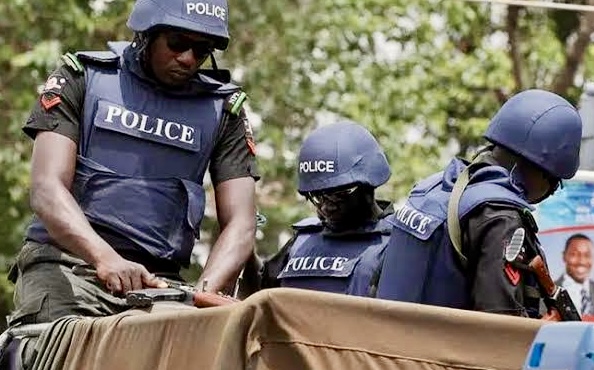
State Police Bill: National Assembly Sends Constitution Amendment to 36 States

Nigeria’s long-running debate over the establishment of state police has entered another major stage after the National Assembly transmitted the Constitution (Sixth Alteration) Bill, 2026, to all 36 State Houses of Assembly for consideration and approval.
The development means state legislators across the country will now have an opportunity to examine the proposed constitutional changes, including the provision relating to state police.
The bill was transmitted on September 16, 2026, by the Clerk to the National Assembly, Kamoru Ogunlana, in accordance with Section 9 of the 1999 Constitution, as amended.
24 States Must Approve the Amendment
The constitutional amendment cannot be completed simply because the National Assembly has approved the proposal.
Under the constitutional alteration process, at least two-thirds of the 36 State Houses of Assembly must approve the amendment. This means at least 24 state legislatures must pass resolutions supporting the relevant constitutional changes before the process can move forward.
The National Assembly has asked the state assemblies to consider the bill according to their legislative procedures and communicate their decisions after completing their deliberations.
Although reports have referred to a 30-day period for the state assemblies to respond, the National Assembly has clarified that the period is an administrative timeframe rather than a constitutional deadline.
What the State Police Proposal Means
The state police proposal is part of a broader constitutional reform process covering several areas of Nigerian governance.
If the relevant constitutional amendment is eventually approved and signed into law, states would have a constitutional framework for establishing their own police services alongside the existing Nigeria Police Force.
The proposal has attracted significant attention because of Nigeria’s continuing security challenges and the argument that policing closer to local communities could improve responses to crimes and security threats.
At the same time, questions have been raised over how state police would be structured, funded and supervised, as well as how state police organisations would relate to the Nigeria Police Force.
The current stage of the process will therefore require state lawmakers to examine not only the principle of state police but also the practical implications of implementing it across different states.
Other Constitutional Reforms Included
The Sixth Alteration Bill is not limited to state police.
The wider constitutional review covers several areas of governance, including local government administration, electoral reforms, judicial administration, devolution of powers, fiscal reforms, human rights and institutional reforms.
This means the 36 State Houses of Assembly will be dealing with a much broader constitutional package rather than a single security proposal.
The National Assembly’s decision to transmit the bill to the states represents the next major stage of the constitutional review process.
State Assemblies Now Face Key Deliberations
The attention will now shift to the 36 State Houses of Assembly as lawmakers begin examining the proposed amendments.
The debate over state police is expected to be particularly important because security remains one of the biggest concerns across several parts of Nigeria.
Supporters of the proposal have argued that state-level policing could provide additional capacity for dealing with local security problems. Critics, meanwhile, have raised questions about political control, funding, accountability and the possibility of state police being influenced by state-level political interests.
Those questions will form part of the wider debate as the state legislatures consider the proposal.
For the amendment to cross the constitutional hurdle, however, the key requirement remains clear: at least 24 of the 36 State Houses of Assembly must approve the necessary constitutional changes.
The next few weeks will therefore be important as the states begin to determine whether Nigeria’s long-standing state police proposal can move another step closer to becoming part of the country’s constitutional framework.