Spain Deploys Troops as Nearly 49,000 Migrants Cross Into Ceuta From Morocco in 24 Hours
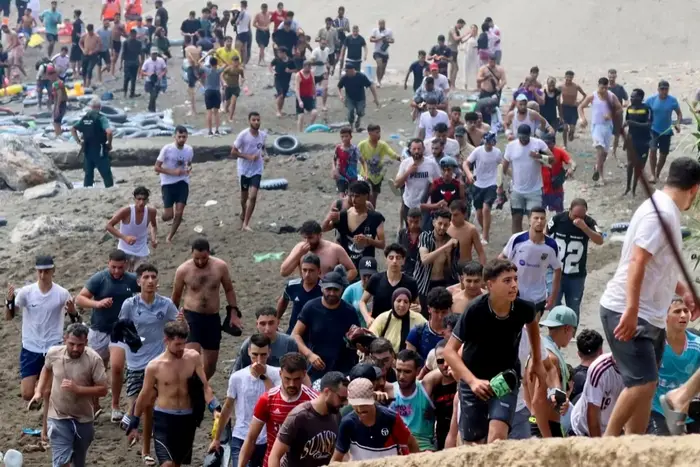
Spain has deployed troops to its North African enclave of Ceuta after an estimated 49,000 migrants crossed from Morocco within just 24 hours, creating one of the country’s largest border crises in recent years.
The unprecedented surge overwhelmed local authorities, with thousands of migrants entering by both land and sea. Many were seen swimming around Ceuta’s coastal breakwater, while others crossed near the heavily guarded border fence.
The number of arrivals is extraordinary, representing well over half of Ceuta’s population of approximately 83,600 residents.
Spanish authorities have also reinforced security in the nearby enclave of Melilla after an additional 300 to 400 migrants reportedly crossed into the territory overnight.
Ceuta, although geographically located in North Africa, is a Spanish territory and part of the European Union, making it one of Europe’s most significant migration entry points.
At Least 18 Feared Dead During Dangerous Crossings
Spanish officials say at least 18 people have died in recent days while attempting the perilous journey into Ceuta.
Authorities said the group of arrivals includes thousands of women, children and babies, with an estimated 7,000 minors among those who entered the enclave.
While migrants usually swim several kilometres along Morocco’s coastline before reaching Ceuta, this latest wave saw many people reaching the border area before swimming around the breakwater into Spanish territory.
Officials have not explained why Moroccan border forces were unable to prevent or disperse the unusually large crowds before they crossed.
Supreme Court Ruling Adds New Challenge for Spanish Authorities
The latest migration surge comes just weeks after Spain’s Supreme Court ruled that migrants intercepted at sea while attempting to reach Ceuta or Melilla cannot automatically be returned to Morocco without legal procedures being followed.
The ruling has complicated Spain’s border management efforts, with authorities now required to process many arrivals through legal channels before any repatriation can take place.
Local leaders in Ceuta had already been requesting additional support from Madrid after reporting a steady increase in attempted crossings over recent days.
Migrants Describe Risky Journey and Lack of Hope
Several migrants who successfully reached Ceuta described the crossing as one of desperation rather than opportunity.
One migrant who later chose to return to Morocco warned others against making the dangerous trip.
“It’s not good at all, and it’s not fun either. People are dying here. I beg you, if you haven’t come yet, don’t come.”
Others insisted they had little reason to remain in Morocco.
A 24-year-old migrant identified as Yassine told Spanish media:
“I have nothing there. Morocco is death.”
Ceuta Residents Fear Growing Security Concerns
The sudden arrival of tens of thousands of migrants has unsettled many residents in Ceuta.
A hospital security guard described the situation as more serious than previous migration waves, saying many people were avoiding public spaces because of safety concerns.
Some residents also argued that many new arrivals were travelling to Spain for economic opportunities rather than fleeing extreme hardship, reflecting growing divisions within the local community over the crisis.
European Leaders Clash Over Border Crisis
The migration emergency has quickly evolved into a political issue across Europe.
Italian Prime Minister Giorgia Meloni described the mass arrivals as “shocking” and warned that the situation posed a serious security challenge for Europe. She also suggested Italy could consider suspending parts of the Schengen free movement arrangements with Spain, although officials later clarified those remarks.
Spain’s Foreign Minister José Manuel Albares strongly criticised the comments, accusing Italian politicians of politicising migration. Madrid has since summoned Italy’s ambassador over the diplomatic dispute.
Meanwhile, Finland’s Interior Minister Mari Rantanen also called for stronger protection of Europe’s external borders, arguing that Spain must improve border security.
Spain Working With Morocco to Return Illegal Entrants
Spain’s Interior Ministry says it is coordinating closely with Moroccan authorities to return migrants who entered the country illegally as quickly as possible under applicable legal procedures.
Prime Minister Pedro Sánchez is also expected to visit Ceuta as authorities continue efforts to restore order and strengthen security along the border.
The situation remains highly fluid, with officials monitoring further crossings while humanitarian teams continue assisting thousands of newly arrived migrants.