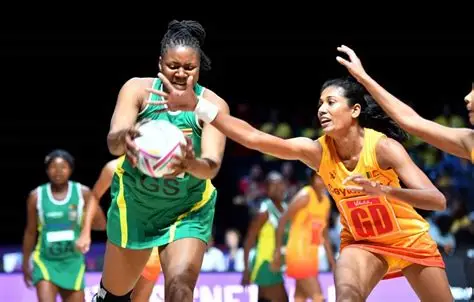
Nigeria’s first-ever national netball team, the Green Hawks, has made history by participating in the Africa Netball Cup and the Netball World Cup Sydney 2027 qualifying competition in Nairobi, Kenya, in September 2026.
The team’s appearance marked a significant moment for Nigerian sport, with Nigeria becoming the first West African nation to participate in the Africa Netball Cup.
Although the Green Hawks faced difficult opposition and suffered defeats during the competition, their participation represented an important step for a sport with a limited senior international presence in Nigeria.
The team was assembled in June 2026 following the establishment of the Nigeria Netball Federation earlier that year.
Its rapid journey from the creation of a national federation to competing at a continental tournament highlighted the determination of the players, coaches and officials involved.
Green Hawks Face Tough Opposition in Nairobi
Nigeria entered the competition in Pool 2, alongside hosts Kenya, Uganda, Malawi and Zambia.
The group presented a challenging introduction to senior international netball for a newly assembled side.
The Green Hawks lost 61–40 to Kenya and 68–30 to Uganda, the latter described in the supplied account as the world’s sixth-ranked team. Nigeria also suffered a heavier defeat against Malawi.
The results reflected the difficulty of competing against more established opposition, particularly for a team still building its experience and organisation.
However, the tournament provided the players with an opportunity to test themselves against stronger teams and learn from the demands of international competition.
For the Green Hawks, the immediate significance of the event went beyond the final scores.
Their participation gave Nigeria a place in a continental netball competition and created a starting point for the development of the national team.
Coach Alison Akinrinlola Says the Team Was ‘Schooled’
The Green Hawks were coached by Alison Akinrinlola, also known as Rosemarie.
Following the difficult matches, Akinrinlola candidly admitted that the team had been “schooled”.
Her assessment acknowledged the gap between Nigeria and more established netball nations while emphasising the importance of learning from the experience.
The challenge now is to turn those lessons into a foundation for future growth.
International competition exposes developing teams to different styles of play, higher levels of tactical organisation and the physical and logistical demands of tournaments.
For Nigeria, the experience in Nairobi can help identify areas where the team needs additional training, preparation and institutional support.
The defeats were disappointing, but they also provided practical lessons that a newly formed team can use as it develops.
A Team Built in Less Than a Year
The Green Hawks’ emergence is notable because the team was assembled in June 2026, following the establishment of the Nigeria Netball Federation earlier that year.
That left a relatively short period between the formation of the national structure and the team’s participation in a major continental competition.
Many of the players are Nigeria-eligible athletes based in England, reflecting the role of diaspora connections in bringing together a competitive squad.
Captain Jade Popoola, aged 22, led the team. She has experience with England’s youth setup and the Netball Super League.
The combination of diaspora-based players, new national structures and coaching leadership helped Nigeria make its international debut in a sport where the country has historically had a limited senior footprint.
The next challenge will be sustaining that progress through regular training, player development and continued support for the federation.
National Pride and Institutional Support
The team’s appearance attracted support from the National Sports Commission and federation officials, who expressed pride in Nigeria’s participation.
The presence of high-level representatives, including Nigeria’s High Commissioner to Kenya, also highlighted the diplomatic and developmental importance attached to the occasion.
For a new national team, that recognition can help draw attention to the sport and the work required to build a sustainable programme.
Participation in international competition also involves practical demands, including preparation, travel, equipment, coaching and coordination.
Maintaining the momentum created in Nairobi will require more than the achievement of a historic debut. It will depend on the ability of the relevant institutions to support the team beyond its first tournament.
Nigeria’s Netball Ambitions and the Sydney 2027 World Cup
The competition also served as a qualifying event for the Netball World Cup Sydney 2027.
Nigeria’s Green Hawks did not secure qualification, but their participation gave the team valuable exposure to the level of competition required at the continental stage.
The experience provides a reference point for future development and a clearer picture of the work needed to compete more effectively.
For a country whose sporting attention often centres on football and athletics, the Green Hawks also demonstrate the potential to expand Nigeria’s presence in other team sports.
The development of netball could create more opportunities for girls and women to participate in organised competition and pursue pathways towards international representation.
A New Opportunity for Nigerian Women’s Sport
The Green Hawks’ debut is significant not only because Nigeria competed at the Africa Netball Cup, but also because the team creates a visible pathway for future players.
New national programmes can encourage participation, raise awareness of less widely followed sports and help young athletes see opportunities beyond the country’s most established sporting disciplines.
The Green Hawks’ results in Nairobi show that substantial development work remains, but the team’s rapid progress from federation formation to continental competition demonstrates what coordinated effort can achieve.
The next stage will be turning the experience into a long-term programme that supports player development and prepares Nigeria for future international events.
Although qualification for the 2027 World Cup proved out of reach, the historic appearance has established a starting point.