Ireland Donates 1,300 Children’s Books to 19 Lagos Public Schools to Improve Reading Culture
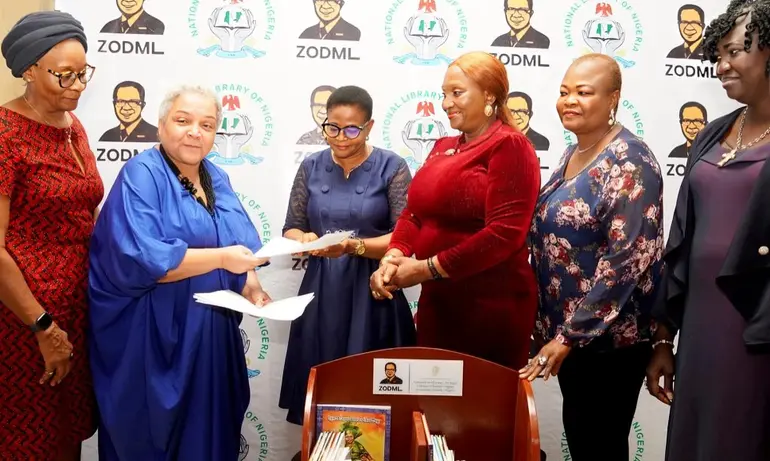
Ireland has donated 1,300 children’s books to 19 public primary schools in Lagos and the National Library of Nigeria as part of efforts to strengthen reading culture among young learners and tackle Nigeria’s growing literacy challenges.
The books were officially presented during a donation ceremony held at the National Library in Yaba, Lagos. The initiative is expected to improve access to quality reading materials for pupils, especially those in public schools.
1,300 Books Distributed to Schools and National Library
The donation was made on behalf of Ireland’s Ambassador to Nigeria, Peter Ryan, who was represented at the event by Nigerian-Irish writer and scholar Aduke Gomez.
A total of 20 beneficiaries received support through the programme, including 19 public primary schools and the National Library of Nigeria. Each beneficiary was presented with a bookshelf containing 65 carefully selected children’s books.
Most of the books were written by Nigerian authors, allowing children to read stories that reflect their culture, environment, and everyday experiences while encouraging a stronger interest in reading.
Ireland Reaffirms Commitment to Education
Speaking during the presentation, Ambassador Ryan said the donation reflects Ireland’s continued commitment to supporting education and promoting literacy among Nigerian children.
According to him, the project is driven by a desire to contribute positively to Nigeria’s educational development and encourage pupils to cultivate a lifelong reading habit.
He noted that exposing children to dozens of quality books would significantly enrich their learning experience and personal development.
ZODML Wants Schools to Build Full Libraries
The books were assembled and distributed by the Zaccheus Onumba Dibiaezue Memorial Libraries (ZODML), a non-profit organisation dedicated to promoting literacy and improving access to books across Nigeria.
Chairperson of ZODML, Ifeoma Esiri, described each bookshelf as the foundation for what should eventually become fully functional school libraries.
She urged school administrators not to see the donation as the final goal but as the beginning of a larger literacy project.
Esiri encouraged head teachers to seek additional support from alumni associations, Parent-Teacher Associations (PTAs), community groups, and other stakeholders to expand the collections into complete libraries capable of serving future generations of pupils.
She stressed that giving children access to books has the power to transform their educational journey and unlock their full potential.
Donation Targets Nigeria’s Growing Literacy Crisis
The donation comes at a time when concerns over Nigeria’s education system continue to grow.
Esiri referenced recent remarks by the Minister of Education, Dr. Tunji Alausa, who revealed that about 75% of Nigerian children are considered “learning poor.” The term refers to children who are unable to read and understand a simple sentence appropriate for their age.
According to her, the donated books are specifically intended for children between five and ten years old—the age group most affected by poor reading ability.
She explained that improving children’s access to engaging and age-appropriate books is one of the most effective ways to address early literacy challenges and help reverse declining reading standards across the country.
Initiative Aims to Inspire a New Generation of Readers
Beyond providing books, the programme seeks to inspire a stronger reading culture among young Nigerians and encourage schools to invest more in library development.
Education advocates believe that increasing access to quality reading materials, particularly books written by Nigerian authors, can help improve literacy, strengthen classroom learning, and foster a lifelong love for reading among children.
The organisers hope the donation will serve as a model for similar partnerships that expand educational resources for public schools across Nigeria.