154 Million Consumers in Digital Dark Age as Infrastructure, Regulation Fail

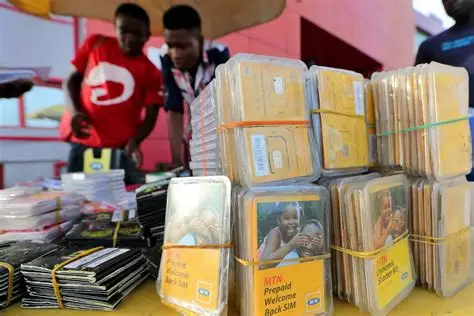
Nigeria has more than 192 million active telephone subscribers, its largest-ever recorded total, a figure the Nigerian Communications Commission confirmed in its July 2026 industry statistics.
Operators added 12.8 million new SIM cards in the first seven months of 2026 alone. Yet fibre-to-the-home connections across the entire country stood at 319,735 at the end of the second quarter of 2026, according to the same NCC data.
That means fewer than 320,000 households in Africa’s most populous nation have a fixed broadband cable running to their front door.
The two numbers placed side by side describe not a digital economy but a digital dependency: an economy built almost entirely on mobile signals that, when disrupted, takes down banking, commerce, logistics and healthcare with it.
Data Demand Is Far Ahead of Infrastructure
The data consumption figures make the scale of this structural imbalance vivid.
Nigerians consumed 10.2 million terabytes of data in the first seven months of 2026, an average of more than 48,000 terabytes per day, driven by video streaming, mobile banking, remote work and fintech adoption.
MTN Nigeria’s active data subscribers reached 55.7 million, with average monthly usage per subscriber climbing to 14.8 gigabytes.
Airtel Nigeria reported a 30.8 percent increase in average customer data usage to 11 gigabytes per month, and data revenue grew 38 percent year on year to N691 billion, making Nigeria Airtel Africa’s most important single market.
Together, MTN and Airtel generated N2.4 trillion in data revenue in the first half of 2026.
This is demand that has long outpaced the physical infrastructure beneath it.
The telecom sector contributed 9.72 percent of Nigeria’s real GDP in the second quarter of 2026, growing 10.38 percent year on year, more than twice the pace of the broader economy.
The Cost of Infrastructure Disruption
The financial toll of this destruction is not abstract.
Industry estimates put the cost between N27 billion and N35.4 billion when direct repair costs, lost revenue and operational disruption are included. Direct repair costs alone exceed N14 billion every year.
MTN budgets approximately N7 billion annually for fibre relocation caused by road works and vandalism.
In 2025, MTN recorded 452 incidents of site vandalism, an average of more than one telecom site attacked every day.

Airtel Africa’s chief executive, Sunil Taldar, framed the power dimension directly:
“We are delivering a network, but we are also becoming power generators. That’s not our core job.”
Airtel runs most of its Nigerian sites on diesel, at nearly four times the operating cost of grid-connected sites.
This is money being consumed by environmental disorder rather than directed toward the last-mile infrastructure that millions of Nigerians still cannot access.
Gbenga Adebayo, chairman of the Association of Licensed Telecom Operators of Nigeria, spoke of how the problem has gone beyond headline rates.
“Some states, for example, will tell us right-of-way is zero, but you have to pay a developmental levy per linear metre,” he told BusinessDay.
“Some states have become commercially unattractive because of both the cost of right-of-way and the way approvals are handled,” Adebayo added.
Operators face a further layer of educational, environmental, effluent discharge, capital deployment and application fees in some states that make the final cost of a single fibre route difficult to budget before work begins.
A Fixed Broadband Market Dominated by Few Operators
Within the narrow fixed broadband market that does exist, concentration is extreme.
MTN FibreX held 176,468 of the country’s 319,735 fibre connections in Q2 2026, representing 55.2 percent of the entire national FTTH market.
FiberOne Broadband followed with 56,486 connections, and ipNX ranked third with 14,698.
The three operators together controlled approximately 77.5 percent of all fibre subscriptions in the country.
Airtel, which only recently entered the wired broadband segment, recorded 4,417 connections.
MTN launched FibreX in April 2025 as a direct response to Starlink’s growing presence, and the product’s subscriber acquisition pace has since far exceeded any rival fixed operator.
Despite that momentum, MTN’s total FTTH base of 176,468 connections, placed against the country’s estimated 45 million households, represents a residential penetration rate of well under one percent.
The NCC’s executive vice chairman, Dr Aminu Maida, has acknowledged that Nigeria’s FTTH penetration remains below the African average of 2.6 percent and far behind global markets where FTTH penetration averages 47 percent.
The physical barriers to closing that gap are formidable and, in the view of operators, largely state-made.
Right-of-Way Charges Remain a Major Barrier
Nigeria’s National Economic Council established a harmonised right-of-way charge of N145 per linear metre in 2020 to replace the inconsistent cost structures that were adding up to 70 percent of total fibre deployment costs.
Six years on, a BusinessDay investigation published on 26 August 2026 found the policy has been routinely subverted.
States including Kano charge N2,754 per linear metre, Delta N2,706, Rivers N2,256 and Ogun N6,600.
Other states nominally adopted the N145 rate but layered application fees on top of it.
Ekiti charges N700,000 in application fees, Taraba N350,000, Cross River N250,000 and Adamawa N100,000, even after waiving the per-metre charge entirely.
Nigeria’s Broadband Problem Goes Beyond Data
The figures paint a difficult picture.
Nigeria has an enormous and growing appetite for internet data, with millions of people depending on mobile networks for banking, business, entertainment, healthcare, logistics and everyday communication.
Yet the fixed broadband infrastructure capable of providing more stable and reliable connections remains extremely limited.
At the same time, operators face costs from vandalism, road works, power challenges, right-of-way charges and additional state-level fees.
The result is a digital economy carrying huge demand on infrastructure that remains far behind the level of usage.
The broadband gap is therefore not simply about how many people can access the internet. It is about the quality, reliability and physical foundation of the connection supporting an economy that increasingly depends on it.
Until the infrastructure and regulatory barriers are addressed together, Nigeria risks having millions of increasingly data-hungry consumers connected to a network environment that remains vulnerable at almost every layer.
The numbers show the demand is already here. The bigger question is whether the infrastructure needed to properly support that demand can finally catch up.