Ted Turner Biography: Life, Career, CNN Empire, Net Worth, Family, Philanthropy and Legacy
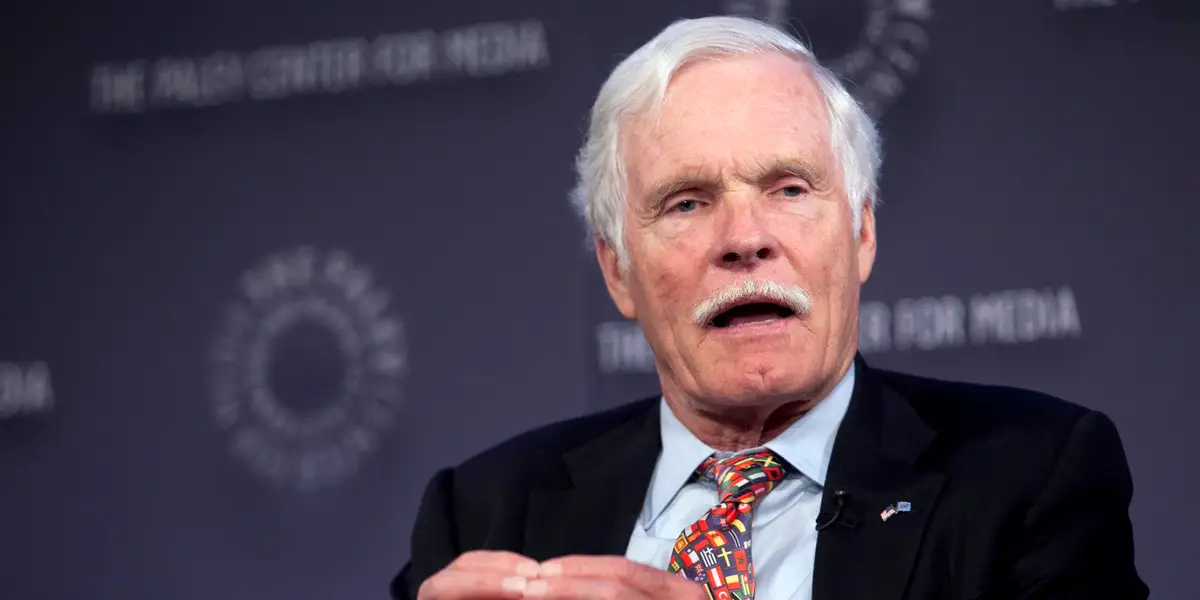
Robert Edward Turner III, widely known as Ted Turner, is an American media entrepreneur, philanthropist, conservationist, and yachtsman who transformed global broadcasting.
He is best known as the founder of CNN (Cable News Network), the world’s first 24-hour news channel, and the pioneer of the “superstation” model that expanded local TV stations into nationwide networks.
Turner reshaped how the world consumes news, sports, and entertainment, building one of the most influential media empires in modern history.
Beyond media, he became one of the largest private landowners in the United States and a major global philanthropist focused on environmental conservation and nuclear disarmament.
Early Life and Background
Ted Turner was born on November 19, 1938, in Cincinnati, Ohio, to Robert Edward Turner II and Florence Turner.
His father owned a billboard advertising company, which exposed Ted early to business and media operations.
His childhood was shaped by:
- Frequent relocation
- A strict and emotionally difficult household
- His father’s struggles with mental health
In 1963, his father died by suicide, a tragic event that deeply influenced Turner’s drive and ambition.
Education and Early Development
Turner attended:
- McCallie School (Tennessee) – developed debate and sailing interest
- Brown University – later expelled for disciplinary reasons
Despite his expulsion, Brown University later awarded him an honorary degree in recognition of his achievements.
He also served briefly in the U.S. Coast Guard Reserve, which helped shape his discipline and leadership mindset.
Career Journey and Business Expansion
Ted Turner’s career began in his father’s advertising company, Turner Advertising, which he later took full control of.
He expanded it aggressively into a profitable outdoor advertising business.
Media Empire Development
Turner Broadcasting System (TBS)
In 1970, Turner acquired a struggling Atlanta TV station (WJRJ-TV), later renamed TBS.
He transformed it into a “superstation” by using satellite technology to broadcast local content nationwide.
This innovation changed television distribution forever.
CNN and the 24-Hour News Revolution
In 1980, Turner launched CNN (Cable News Network), the world’s first 24-hour news channel.
Impact of CNN:
- Continuous global news coverage
- Real-time war reporting (notably Gulf War coverage)
- Shift from scheduled news to instant news cycles
CNN became a global standard for modern journalism.
Expansion of Media Networks
Turner expanded his empire into multiple entertainment channels:
| Network | Purpose |
|---|---|
| CNN | 24-hour global news |
| TBS | General entertainment |
| TNT | Drama and sports |
| Cartoon Network | Children’s animation |
| TCM | Classic film preservation |
Sports and Entertainment Investments
Turner also became heavily involved in sports and entertainment:
- Owned Atlanta Braves (MLB) – World Series win in 1995
- Owned Atlanta Hawks (NBA)
- Promoted WCW wrestling (World Championship Wrestling)
- Acquired MGM/UA film library rights
Business Empire Overview
| Sector | Key Assets | Impact |
|---|---|---|
| Television | CNN, TBS, TNT, Cartoon Network | Global media transformation |
| Film | MGM/UA Library | Preservation of film history |
| Sports | Braves, Hawks, WCW | Sports commercialization |
| Advertising | Turner Outdoor Advertising | Original wealth base |
| Conservation | Ranch lands | Environmental legacy |
Corporate Merger
Turner merged his company with Time Warner in the mid-1990s.
While the merger expanded global reach, Turner later expressed regret, saying it reduced his control and diluted his original vision.
Political Views and Public Influence
Turner’s political views evolved over time:
- Early influence: conservative upbringing
- Later shift: progressive and globalist views
He strongly supported:
- Environmental protection
- Nuclear disarmament
- United Nations initiatives
- Climate change awareness
He earned the nickname “Mouth of the South” due to his outspoken nature.
Philanthropy and Environmental Legacy
Ted Turner is one of the most impactful private philanthropists in modern history.
Major Contributions:
- Donated $1 billion to the United Nations Foundation
- Co-founded the Nuclear Threat Initiative (NTI) with Sam Nunn
Environmental Contributions
Turner owns over 2 million acres of land across the United States.
His conservation work includes:
- Bison restoration programs
- Wildlife rewilding projects
- Sustainable ranching systems
- Eco-tourism development
He also founded Ted’s Montana Grill, promoting bison meat as a sustainable food source.
Family and Personal Life
Ted Turner has been married three times and has five children.
Family Overview
| Spouse | Years | Children |
|---|---|---|
| Judy Nye | 1960–1964 | Laura Turner Seydel, Robert Edward Turner IV |
| Jane Shirley Smith | 1965–1988 | Beau, Rhett, Jennie Turner Garlington |
| Jane Fonda | 1991–2001 | No children |
His marriage to actress Jane Fonda remains one of the most publicized celebrity relationships of the 1990s.
Net Worth and Financial Overview
Ted Turner’s wealth has fluctuated significantly over time.
Net Worth Timeline
| Period | Estimated Net Worth | Key Factors |
|---|---|---|
| Mid-1990s peak | ~$10 billion | CNN dominance |
| Post-Time Warner merger | Decline | Corporate restructuring |
| Recent estimates (2025) | ~$2–3 billion | Land + investments |
Wealth Breakdown
| Asset Type | Description |
|---|---|
| Land Holdings | ~2 million acres of ranches |
| Conservation Assets | Bison herds, ecosystems |
| Media Legacy | Residual broadcasting value |
| Business Ventures | Ranching, restaurants |
Health and Later Years
In 2018, Turner was diagnosed with Lewy body dementia, a progressive neurological condition.
His health has gradually declined since then, but he has remained under care and largely out of the public spotlight.
Legacy and Global Impact
Ted Turner’s legacy remains one of the most powerful in media history.
Key Contributions:
- Founded CNN and changed global news forever
- Created the superstation TV model
- Expanded cable television worldwide
- Preserved classic film libraries
- Advanced global environmental philanthropy
Conclusion
Ted Turner stands as one of the most influential media pioneers in modern history.
From transforming a local TV station into a global news empire to redefining environmental philanthropy, his impact spans multiple industries.