Nigeria Becomes Africa’s Fastest-Growing Aviation Market With 37.4% Capacity Increase
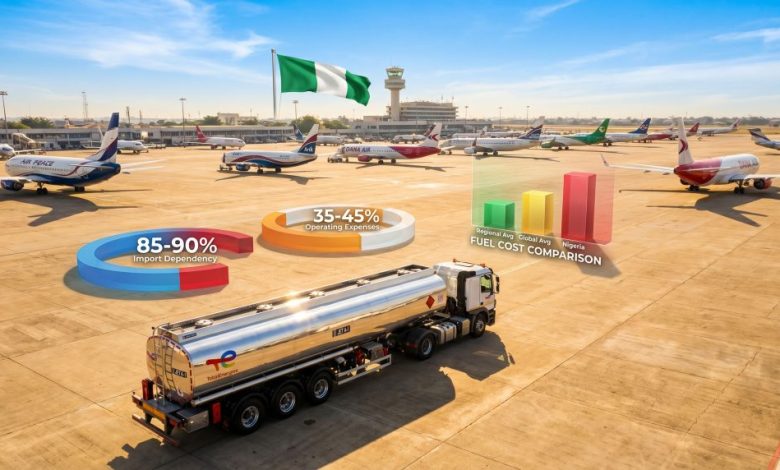
Nigeria has recorded the fastest growth in air travel capacity among Africa’s ten largest economies during the first nine months of 2026, with scheduled departing seats increasing to 1,194,480 from 864,100 during the same period last year.
The increase represents a 37.4 percent year-on-year growth and places Nigeria among the continent’s fastest-expanding aviation markets.
Domestic capacity recorded an even stronger increase, rising 44.8 percent year-on-year to 877,435 seats as Nigerian airlines expanded their operations on domestic routes.
Air Peace has been one of the major drivers of the increase. The airline’s scheduled seats reportedly rose 54.7 percent to 354,804, helping it return to Africa’s top ten airlines by capacity.
Murtala Muhammed International Airport in Lagos also recorded significant growth, with departing seats increasing by 24.1 percent year-on-year to approximately 470,000.
Despite the increase, Lagos remained behind Cairo in terms of total airport capacity. Cairo recorded about 1.79 million departing seats during the period, making it the busiest airport on the continent.
Aviation data provider OAG attributed Nigeria’s growth to factors including currency reforms, new aircraft leasing arrangements and increased confidence among foreign and domestic airlines operating in the Nigerian market.
Etihad Airways was among the international carriers that expanded its presence in Nigeria during the period.
Nigeria’s 37.4 percent growth compares with an average African aviation capacity increase of about 9.4 percent. Across Africa, total scheduled seats reportedly reached approximately 25.8 million in September 2026.
The expansion could have broader implications for Nigeria’s aviation sector if it continues through the rest of the year. More domestic capacity could improve connectivity between Nigerian cities, while additional international capacity could strengthen links between Nigeria and major global destinations.
However, continued growth will also depend on airlines’ ability to manage operating costs, aircraft availability, foreign exchange pressures, airport infrastructure and passenger demand.
For now, the figures indicate that Nigeria’s aviation market has experienced a substantial increase in capacity during 2026, with domestic airlines playing a major role in the expansion.