Kayode Fayemi Urges Nigerian Catholics to Take Politics Seriously
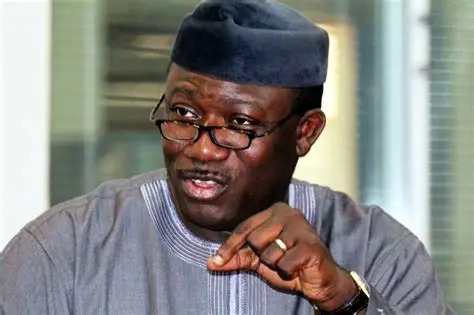
Former Ekiti governor Kayode Fayemi has used a live-streamed and heavily clipped speaking engagement to urge Nigerian Catholics not to treat politics as a dirty game, but to become active participants in the country’s political process.
His message centres on the argument that people of faith should not completely withdraw from politics simply because the system has a reputation for being difficult or controversial. Fayemi uses his own experience as an illustration that people of faith can exist within the political system without necessarily losing their core values.
The message has since generated different reactions, particularly among people who regularly discuss religion, leadership and politics across Nigerian social media platforms.
Fayemi’s Message to Catholics
Fayemi’s position is that Nigerian Catholics should consider active participation in politics rather than viewing the political space as something that should be avoided.
His own experience was used to support the point that people who hold strong religious and personal values can still participate in the system while attempting to maintain those principles.
The argument has received support from some listeners, who welcome the call as overdue.
For those who agree with him, staying away from politics does not necessarily solve the problems within the system. Instead, they believe that people with strong values should be encouraged to participate and contribute to leadership and decision-making.
Others, however, have responded with a more cautious view.
They argue that the nature of Nigerian politics makes it difficult for anyone to participate completely cleanly. For this group, the challenge is not simply convincing religious people to enter politics, but creating an environment where those values can survive the realities of political competition.
That disagreement has helped keep Fayemi’s comments in circulation.
The Conversation Moves Across Religious Groups
The conversation has remained lively in religious and political WhatsApp forums, where longer musings and reactions to the former governor’s comments continue to be shared.
Unlike a statement that is limited to one political party or campaign, Fayemi’s cautious tone has allowed the message to travel across denominational lines.
The emphasis is largely on participation and the place of people of faith in public affairs rather than on endorsing one particular political party.
That distinction has also helped the conversation reach people outside the Catholic community.
Some participants see the message as a reminder that politics affects virtually every part of society, including education, security, the economy and public services. Others continue to question whether entering the political space is enough to produce meaningful change when the wider system remains difficult.
Both positions have contributed to the ongoing discussion.
Why the Warning Matters
Fayemi’s comments have therefore opened up a wider conversation about whether religious communities should become more involved in politics or maintain greater distance from it.
For supporters of his position, political participation can provide an opportunity for people who believe in accountability and responsible leadership to have a direct role in shaping decisions.
For critics, the concern remains whether such ideals can be maintained once political realities come into play.
Either way, the discussion shows that the relationship between faith and politics remains an important issue in Nigeria.
Fayemi’s message has continued to travel through religious and political networks because it touches on a question that goes beyond one denomination: whether people who are unhappy with the political system should remain outside it, or enter the space and attempt to influence it from within.
For now, the conversation remains active across the forums where his remarks were first discussed, with listeners continuing to debate whether greater participation by people of faith could make a meaningful difference in Nigerian politics.