Electricity Tariff Claims Debunked as Power Minister’s Position Is Clarified
Fresh clarification has emerged over widespread reports claiming that the Federal Government is preparing to increase electricity tariffs and completely remove electricity subsidies.
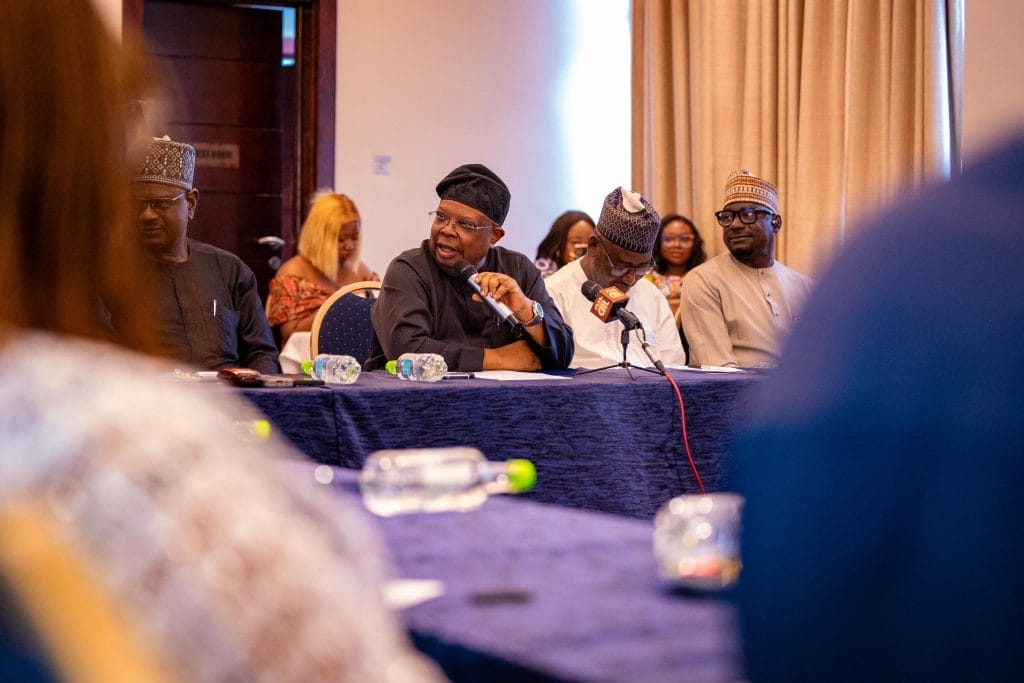
Industry stakeholder and Nigerian Electricity Supply Industry (NESI) analyst Gaffar Tunde has explained that several reports circulating after the Minister of Power’s media briefing misrepresented what was actually discussed.
According to Tunde, the minister’s engagement with senior journalists in Abuja focused on the government’s long-term strategy for improving electricity generation, transmission, and distribution, not on introducing fresh tariff hikes or ending subsidies.
He urged Nigerians to rely on accurate information rather than reports that distort official statements and create unnecessary panic.
Power Ministry Targets Major Transmission Upgrade
During the media briefing, the Minister of Power, Joseph Tegbe, outlined key priorities aimed at strengthening Nigeria’s electricity infrastructure.
One of the ministry’s immediate goals is a comprehensive technical audit of the national transmission network. The assessment will identify ageing equipment, overloaded substations, weak transmission routes, operational bottlenecks, protection failures, and other vulnerabilities affecting power delivery.
The findings are expected to guide future investments, improve planning, reduce system failures, and ensure government spending delivers measurable improvements across the power sector.
Three Critical Power Corridors Set for Investment
The minister also announced plans for strategic investments across three major transmission corridors considered vital to improving grid reliability.
The targeted corridors include:
- Lagos
- Enugu–Port Harcourt
- Abuja–Kaduna–Kano
According to the ministry, strengthening these transmission routes is expected to enhance grid stability and improve electricity supply across key regions.
Rural Electrification to Bridge Distribution Gaps
Another major focus highlighted during the briefing was improving electricity distribution through closer collaboration with the Rural Electrification Agency (REA).
The ministry plans to adopt an integrated approach that combines conventional power infrastructure with off-grid solutions to extend electricity access to underserved communities.
Officials believe this strategy will help close distribution gaps while improving overall service delivery nationwide.
Commercial Hubs to Support Broader Power Expansion
The minister also explained that the government intends to strengthen financially viable electricity markets in order to improve liquidity within the sector.
Under the proposed approach, commercially strong areas with higher electricity demand will generate the financial support needed to fund projects in less profitable regions.
The objective is to create a more sustainable electricity market capable of supporting continued infrastructure expansion across Nigeria.
Government Prioritises Better Service for Nigerians
While acknowledging that Nigeria’s electricity sector still faces significant challenges, the minister noted that progress is being recorded.
He referenced the country’s achievement of approximately 5,000 megawatts of electricity generation but stressed that generation alone is not the ultimate goal.
According to him, real success will be measured by the ability to reliably deliver electricity to homes, businesses, communities, educational institutions, and industrial clusters.
More Universities and Hospitals to Receive Mini-Grid Power
The minister also highlighted the impact of Rural Electrification Agency projects that have already supplied electricity to several public institutions through mini-grid systems.
He revealed that a new phase of the programme will extend power projects to additional institutions, including:
- University of Lagos (UNILAG)
- University College Hospital (UCH), Ibadan
- The Polytechnic, Ibadan
The initiative is expected to improve electricity access for thousands of students, healthcare workers, researchers, and surrounding communities.
What the Minister Never Said About Electricity Tariffs
Gaffar Tunde stressed that several claims circulating online did not reflect the minister’s actual remarks.
According to the clarification:
- The minister did not announce a fresh electricity tariff increase.
- He did not state that electricity subsidies had been completely removed.
- He did not suggest that government policies were designed to benefit only a select group of solar manufacturers.
Instead, the minister explained that electricity subsidies differ from fuel subsidies because they largely represent a tariff shortfall within the electricity market rather than direct government cash payments.
Calls for Accurate Reporting on Power Sector Reforms
Tunde urged the public and media organisations to avoid spreading misleading interpretations of government statements, warning that inaccurate reporting could create unnecessary confusion over ongoing electricity reforms.
He maintained that while Nigeria’s power sector still has considerable work ahead, the government’s current focus remains improving infrastructure, expanding electricity access, strengthening the transmission network, and delivering more reliable power supply to Nigerians.
With several transmission projects and rural electrification initiatives already planned, the ministry says its priority is improving service delivery rather than announcing new tariff policies.