Lagos Govt Orders Demolition of Structures Blocking Drainage Channels in Lekki
Lagos State Government has announced intentions to destroy unlawful constructions blocking canal rights of way and drainage systems in Lekki.
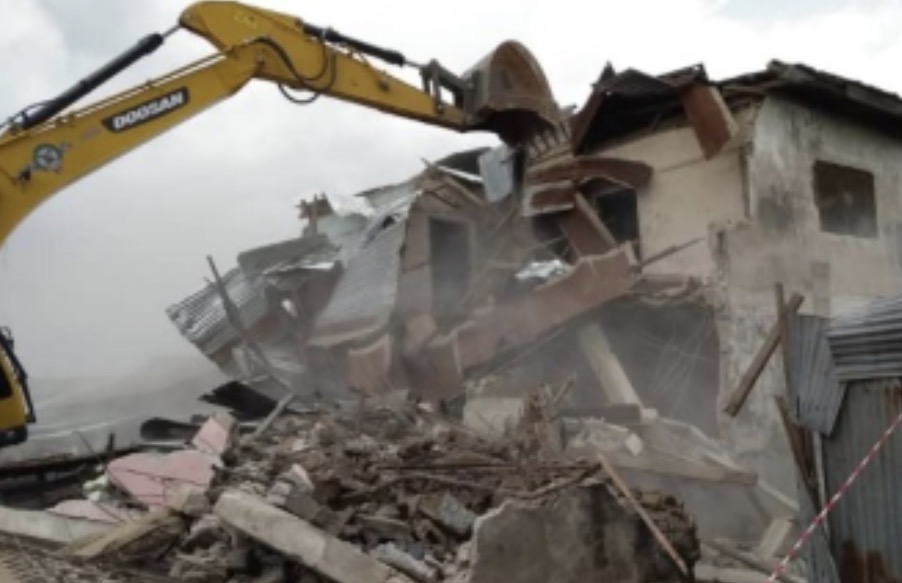
In an effort to combat floods and uphold environmental laws, the Lagos State Government has announced intentions to destroy unlawful constructions blocking canal rights of way and drainage systems in Lekki.
The effort will impact illegal structures along Agungi, Ajiran, and Ikota, according to a statement from the state government. It emphasised that no person or developer would be exempt if they were discovered to have encroached on drainage channels.
After examining significant drainage infrastructure and flood control projects in Lekki, Agungi, Ikota, and Ajiran, Commissioner for the Environment and Water Resources Tokunbo Wahab said this. The examination came after several reports of flooding in Agungi, even though significant drainage work had been finished there more than two years prior.
According to Wahab, during the examination, officials found a significant obstruction—a land-owning family’s blockage of the Ajiran outfall channel—that was causing the ongoing flooding in Ajiran.
He claims that in order to stop stormwater from leaving the neighbourhood, the family unlawfully obstructed the mouth of a major drainage channel that empties into the Lagos Lagoon.
He clarified that the blockage has significantly decreased the drainage system’s ability to naturally release floodwater into the lagoon by gravity.
We found that the lagoon’s exit had been purposefully obstructed; the water cannot leave the area unless that channel is opened. In the overwhelming public interest, we have consequently ordered that it be reopened right away,” he stated.
The commissioner emphasised that no one has the right to block public drainage infrastructure or natural rivers, even though the government respects lawful land ownership and Certificates of Occupancy.
“We are not taking anyone’s land; we are just restoring the channel to allow water flow into the lagoon,” he said. “No one is above the law; having title to land does not give anyone the authority to close a drainage channel or water body that serves thousands of residents.”
Agungi and Ajiran depend on a special drainage system that transports stormwater into the Lagos Lagoon via Chevron Drive, according to Wahab.
Despite the government’s massive investment in drainage infrastructure, he cautioned that households are vulnerable to severe flooding when drainage canals are blocked.
“We will continue to open up blocked drainage channels wherever they are found in the overriding public interest,” he stated. “You can imagine the level of flooding within the community, and eventually the government gets blamed for inadequate infrastructure; taxpayers’ money is being used to construct and maintain these drainage channels; residents should not make the situation worse by blocking them.”
The commissioner also visited Megamond Estate in Ikota, where he claimed that developers had started building without the necessary drainage and environmental permits and had unlawfully reclaimed a portion of the Ikota River. Some of the projects, he continued, went beyond the state government’s prior permissions.
He claimed that the developers had already received enforcement and abatement warnings, but they had disregarded them.
“All unauthorised structures built on recovered drainage alignments in this estate will be demolished starting tomorrow morning. He pointed out that this move will make it very evident that Lagos will not put up with encroachment on public infrastructure or drainage systems.
According to enquiries, no application or approval had been given for the development in question, according to Wahab, who also stated that enforcement will start right away.
He reaffirmed that before construction can start, all projects including wetlands or water must adhere to environmental standards.
He claims that before beginning any building or reclamation, developers must get an Environmental Impact Assessment (EIA) and, if required, Wetland Clearance from the Ministry of the Environment and Water Resources.
The commissioner clarified that the Environmental Impact Assessment provides ways to mitigate potential adverse impacts and assists in determining the likely impact of proposed developments on the environment.
In order to guarantee that drainage, environmental, and wetland issues are appropriately addressed prior to permissions being issued, he continued, the ministry runs an integrated approval process in cooperation with the Office of Drainage Services and other pertinent departments.
Wahab bemoaned the fact that many developers wilfully disregard these legal restrictions by starting building and reclamation before requesting approval.
He insisted that illegal reclamations and developments that break environmental rules would still be removed by the government.
Whose bull is gored doesn’t matter to us. It is wrong because it jeopardises public safety, unfair to the system, and unjust to law-abiding citizens, he said.
Additionally, the commissioner urged citizens to report environmental infractions in order to aid the government’s efforts.
“We urge Lagosians to notice something and express their opinions.” Whistleblowers alerted us to the illicit activity found during today’s inspection. We looked into it, confirmed the reports, and took quick action. In order to safeguard our drainage infrastructure, residents must play a crucial role, he continued.
Wahab gave locals the assurance that the Lagos State Government would keep enforcing environmental regulations strictly and continuing to invest in robust drainage systems in order to safeguard people, property, and public infrastructure.