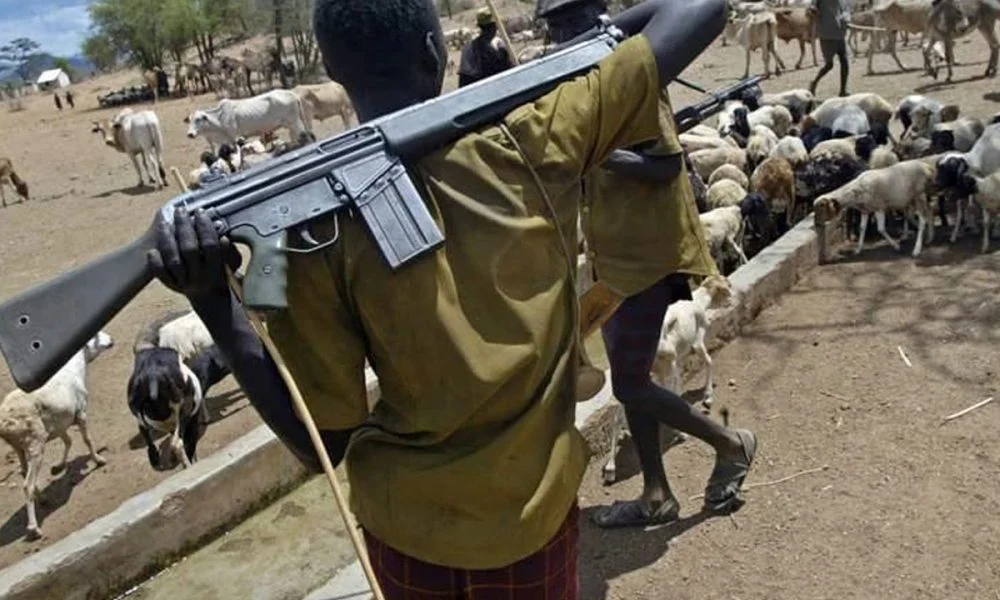
The Universal Reformed Christian Church, better known as NKST, has raised fresh concerns over the Federal Government’s plan to introduce a pilot ranching programme in Benue State, arguing that the state needs to deal with the destruction and displacement caused by years of violence before taking on a project that will require land.
The church said its concern is not about ranching itself or any peaceful attempt to improve livestock farming, but about what it described as the situation on the ground in communities that have suffered repeated attacks.
According to NKST, 5,987 of its members have been killed while 753 of its worship centres have been destroyed in attacks it blamed on armed herdsmen in Benue and neighbouring states.
The church made its position known in a statement issued by the General Secretary of its Synod Executive Committee, Rev. Ta Targba.
Targba said NKST was not against peaceful livestock production or efforts by the Federal Government to find a lasting solution to the long-running farmers-herders crisis.
However, he said choosing Benue as the pilot state for the ranching programme was unacceptable given the level of killings, destruction and displacement communities in the state have experienced.
He said the priority should first be on getting displaced residents safely back to their ancestral communities and restoring the areas that were destroyed before introducing a policy that would involve land allocation.
“Benue is not merely a geographical space available for government experimentation. The state is predominantly an agrarian society. Its land is the ancestral inheritance, economic foundation and livelihood of millions of people,” Targba said.
The NKST General Secretary pointed out that generations of Benue residents had depended on their ancestral lands, where they cultivated farms and built their homes and other important institutions.
He listed churches, schools, hospitals and markets among the facilities established by communities over the years.
His argument is that any government decision involving the allocation, acquisition or conversion of land in the state must properly consider the ancestral rights, livelihoods and property rights of the people who depend on that land.
He also said the constitutional interests of affected communities must not be ignored in the process.
Targba questioned why Benue, after years of violence that displaced residents from several communities, should now be selected to test a ranching policy that would require land for the livestock sector.
“The NKST Church therefore asks: Why should a state whose people have suffered displacement and destruction because of violent conflict now be selected as a laboratory for a policy involving land allocation for the same livestock economy that has been at the centre of these conflicts?
“The answer cannot be merely administrative. The people of Benue deserve to be heard,” he said.
NKST cites impact of attacks on members
The church said its position was also shaped by the effect the prolonged security crisis has had on its members and its institutions across affected communities.
Targba alleged that thousands of people connected to the church had been killed in the attacks, while hundreds of worship centres were destroyed.
“Over 5,987 of our members have been killed; 753 of our worship centres were destroyed by these marauders,” he alleged.
The figures presented by the church underline the scale of the losses it says its members and institutions have suffered during the prolonged violence.
NKST said the situation also means that many displaced residents are yet to return to their ancestral communities, making resettlement a more immediate concern than the proposed ranching programme.
The church therefore called on the Federal Government to make the restoration and resettlement of displaced communities the starting point for any agricultural intervention in Benue.
Church demands security before resettlement
Beyond the return of displaced residents, NKST said adequate security must be provided to ensure that people who choose to return can do so safely and voluntarily.
It argued that returning people to communities without sufficient protection would not provide a lasting solution to the crisis.
The church also called for government support to rebuild communities and replace facilities destroyed during attacks.
It said homes, schools, healthcare centres, markets, roads, water facilities and churches damaged or destroyed in the affected areas should be reconstructed.
NKST further demanded a comprehensive inventory of public and faith-based institutions destroyed in communities affected by the violence.
According to the church, documenting the destruction would help establish the extent of the damage and provide a clearer basis for reconstruction and recovery efforts.
NKST rejects ranching on displaced communities’ land
The church ultimately insisted that the Federal Government should not establish ranches on land belonging to communities whose residents were violently forced out.
It maintained that the rights of displaced people to their ancestral land must be addressed before any decision is taken to allocate or convert such land for ranching.
For NKST, the issue goes beyond the proposed livestock programme. The church said the government must first restore security, return displaced residents to their communities and rebuild the homes and institutions destroyed by the conflict.
It added that the people of Benue should have a meaningful say in any government policy that affects their ancestral lands, livelihoods and communities.