Niger communities demand roads, schools, hospitals as Suleja, Gurara, Tafa record poor capital spending
Residents and community representatives across Suleja, Gurara and Tafa Local Government Areas of Niger State are asking the state government to put basic infrastructure at the centre of its 2027 budget, with roads, schools and hospitals emerging as some of their most pressing needs.
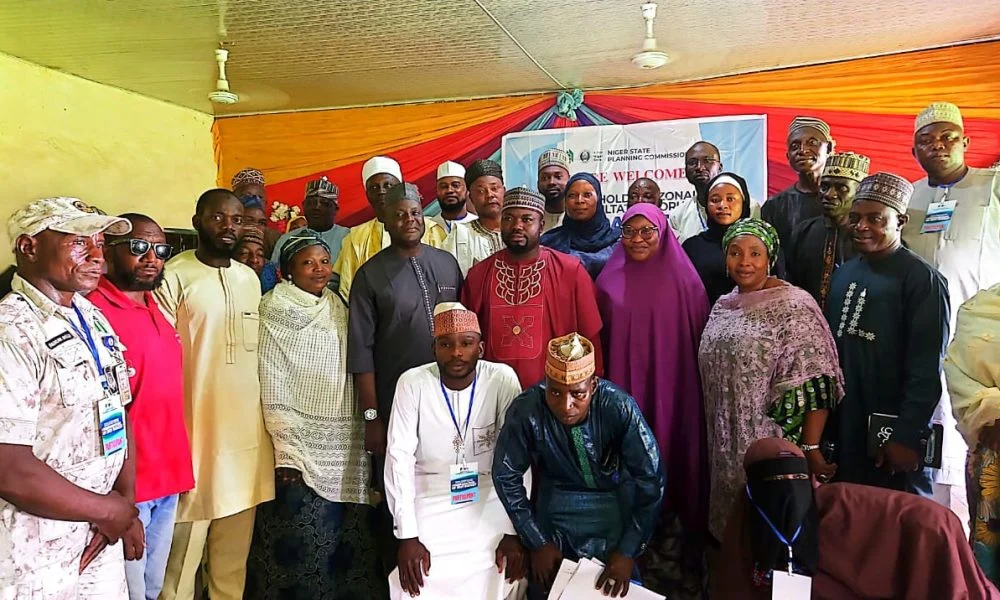
The demand was made during a 2027 Budget Preparation Citizens’ Engagement held on Monday at Gawu-Babangida in Gurara Local Government Area.
The consultation, organised by the Niger State Planning Commission, brought together representatives of different groups and institutions from the three local government areas to present the needs of their communities and discuss how they should be reflected in the next budget.
Youth organisations, civil society groups, vigilante groups, religious bodies, traditional institutions and Directors of Planning, Research and Statistics from the three councils were among those who took part in the engagement.
A major concern raised during the meeting was not only the provision of projects in the budget, but the need for the government to actually execute them.
Stakeholders stressed that projects included in the 2027 budget should not remain as figures on paper, particularly at a time when several communities are still struggling with inadequate roads, schools and healthcare facilities.
Communities want projects implemented, not just budgeted
The stakeholders called for greater attention to projects that directly affect the daily lives of residents across Suleja, Gurara and Tafa.
Road rehabilitation was among the major concerns, with communities seeking better roads to improve movement, access to markets and other economic activities.
They also asked for more attention to schools and hospitals, particularly projects capable of improving access to basic education and healthcare services in the affected communities.
Their concerns came against the background of the low level of capital expenditure recorded by the three local government areas in the 2026 budget.
Figures presented at the engagement showed that the councils had achieved only 4.22 per cent performance in their 2026 capital expenditure.
The poor performance raised questions about the extent to which projects approved in the previous budget had translated into actual development across the councils.
Three councils recorded N150.70m capital accrual
The Director of Planning in the Ministry for Local Government and Chieftaincy Affairs, QS Usman Musa Jemaku, said the three councils had a combined N3.57 billion approved for capital projects in 2026.
However, only N150.70 million had accrued from the approved amount.
The figure represents a very small portion of the capital allocation and was one of the issues highlighted as stakeholders discussed their expectations for the 2027 budget.
The figures suggest a wide gap between the amount provided for capital projects and the amount that had actually accrued for implementation.
For communities already dealing with infrastructure challenges, stakeholders argued that closing this gap would be important if the next budget is to produce visible results.
Urban and rural renewal records 9.15% performance
The performance figures presented at the meeting also showed challenges in the area of urban and rural renewal.
According to Jemaku, N3.67 billion was approved for urban and rural renewal, but only N336 million had accrued.
This represented 9.15 per cent performance.
The figures again highlighted the difference between budgetary provisions and actual accruals, with stakeholders seeking stronger implementation of projects at the local government level.
For the communities involved, the concern goes beyond the size of the allocations. What matters to residents is whether the funds provided in the budget eventually result in completed roads, functioning public facilities and other projects that can be seen and used.
Niger proposes N569.27bn capital expenditure for 2027
At the state level, the Niger State Government is proposing N569.27 billion for capital expenditure in the 2027 budget.
The Director of Budget Planning Commission, Umar Isah, disclosed this during the citizens’ engagement.
He said the economic sector would receive the largest share of the proposed capital expenditure, with N433.22 billion earmarked for the sector.
The proposed allocation comes as the state continues to review the performance of its 2026 budget and gather inputs from citizens and stakeholders ahead of the preparation of the 2027 budget.
Isah also disclosed that Niger State recorded N179.65 billion in actual capital accrual from the N783.96 billion approved for capital expenditure in 2026.
That amounted to 22.92 per cent performance.
The figures presented at the state level and those from the three councils showed that budget implementation remains a major issue as the state prepares its next spending plan.
Budget planning requires government and citizens to work together
Isah described budget preparation as a shared responsibility between government and citizens.
He said cooperation between the two sides was necessary to improve service delivery and ensure that public spending responds to the actual needs of the people.
The engagement therefore provided an opportunity for residents and community representatives to identify projects they consider important to their areas before the 2027 budget is finalised.
Isah also called on the three local government areas to strengthen measures aimed at preventing revenue leakages.
Improved revenue collection, he said, would help the councils strengthen their financial position and support better delivery of projects and services.
Planning Commission promises to reflect stakeholders’ inputs
Speaking on behalf of the Commissioner for Planning Commission, Mustapha Ndajowo, the Permanent Secretary, Hajiya Aisha Usman, said citizens’ engagement had contributed to efforts to reposition the commission’s activities, especially at the local government level.
She said the consultation process was important because it allowed communities to present their priorities and participate in discussions around the preparation of the state’s budget.
Usman also disclosed that the 2026 local government budgets were available online.
According to her, the budgets had been converted to the International Public Sector Accounting Standards (IPSAS), using the segments and digits contained in the National Chart of Accounts.
She urged local government chairmen to continue training planning officers in their councils and make greater use of technology.
According to her, stronger use of technology could help councils reduce revenue leakages and improve budget implementation.
She also assured the stakeholders that the issues and priorities raised during the engagement would be taken into consideration in the preparation of the 2027 budget.
Council chairmen urged to strengthen planning and revenue systems
Usman further urged the chairmen of the three local government areas to sustain efforts to improve planning and strengthen their revenue systems.
The call comes amid concerns over the relatively low capital performance recorded by the councils in 2026.
Improved planning, better revenue collection and stronger monitoring of projects could help councils move beyond budget provisions and achieve more meaningful implementation.
For residents, however, the ultimate test will be whether the priorities raised during the consultation translate into projects delivered in their communities.
Gurara chairman pledges improved revenue generation
The Chairman of Gurara Local Government Area, Engr. Jonah Ishaya Kabo, commended the Niger State Planning Commission for continuing with its annual citizens’ consultation.
Kabo said the council would intensify efforts to improve its internally generated revenue.
His commitment is significant as local government finances remain an important part of the discussion around project implementation.
With stakeholders demanding better infrastructure and the state government preparing its 2027 spending plan, stronger revenue mobilisation could provide councils with additional resources to meet some of their responsibilities.
Planning Commission seeks traditional ruler’s support
Before the citizens’ engagement, a delegation from the Planning Commission visited the Hakimi of Gawu, Alhaji Musa Sarki.
The visit was aimed at seeking his support and royal blessing for the consultation.
The traditional ruler welcomed the initiative and commended the commission for taking the budget preparation process closer to the people.
He also prayed for the success of the exercise.
The consultation in Gurara is part of the process through which the state government is gathering priorities from communities ahead of the 2027 budget.
For Suleja, Gurara and Tafa, stakeholders have made their priorities clear: better roads, improved schools and stronger healthcare infrastructure, alongside a stronger commitment to ensuring that projects approved in the budget are actually implemented.
With the three councils recording just 4.22 per cent capital expenditure performance in 2026, the implementation of the 2027 budget will be closely tied to whether the needs raised by communities move from budget documents to completed projects.