Olabisi Onabanjo University Teaching Hospital Admission Guide
Olabisi Onabanjo University Teaching Hospital Admission Guide (2026): What You Must Know Before Applying
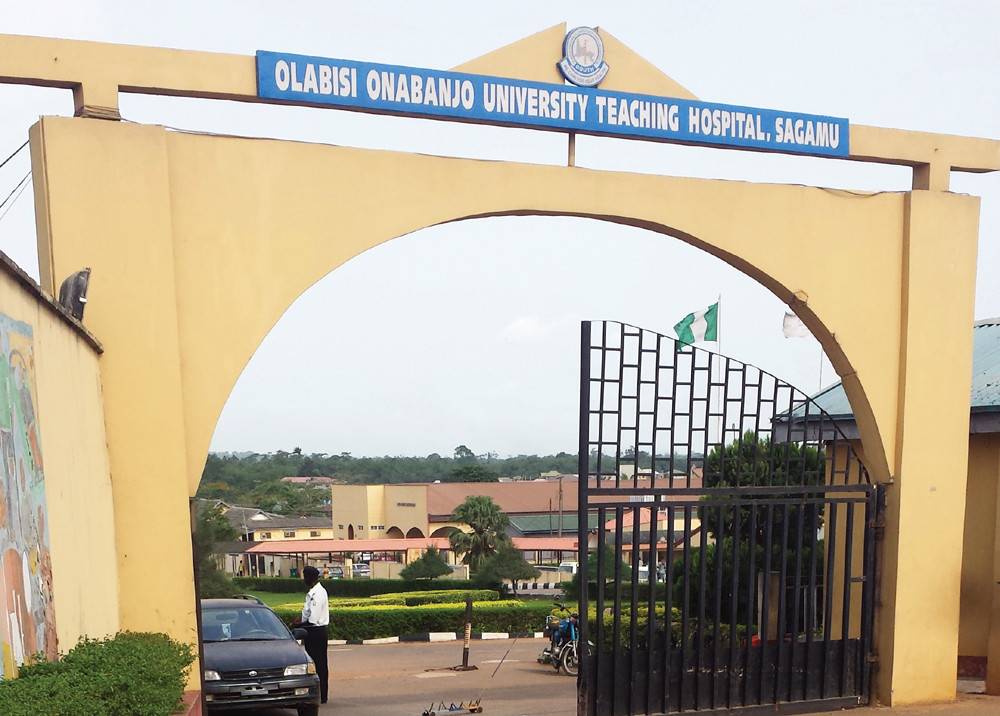
Getting into a medical-related course in Nigeria is not something you should rush or approach blindly. Without a clear understanding of how the admission system works, you may waste time or fall victim to misinformation. Many applicants still believe that the teaching hospital itself sells admission forms or conducts direct admissions, and this misconception has cost several candidates their chances.
The truth is that the entire admission process connected to the teaching hospital follows a structured academic route. Once you understand this process, everything becomes clearer and easier to plan. From your O’Level results to JAMB, Post-UTME, and final screening, every stage is important. This guide explains the process as it truly works, based on verified information and current practices.
If you are serious about studying Medicine, Nursing, or any health-related course linked to Olabisi Onabanjo University Teaching Hospital, read this carefully before making any decisions.
How OOUTH Admission Actually Works
The first thing to understand is this: OOUTH does not conduct its own undergraduate admissions.
All admissions into Medicine, Nursing, and other health-related programmes are handled through Olabisi Onabanjo University, specifically under the Obafemi Awolowo College of Health Sciences. The teaching hospital in Sagamu is primarily used for clinical training, not for selling admission forms or admitting students directly.
Courses Available for Students Linked to OOUTH
Programmes associated with the teaching hospital are organized under different faculties within the College of Health Sciences.
Under Basic Medical Sciences, available courses include Anatomy, Biochemistry, Physiology, Forensic Science, and Nursing Science.
Under Basic Clinical Sciences, you will find programmes such as Medical Laboratory Science and Pharmacology.
For those pursuing advanced medical training, the Faculty of Clinical Sciences offers Medicine and Surgery (MBChB).
Students in these programmes typically begin clinical exposure at the teaching hospital from their mid-level years through to final year.
Course Duration
Medicine and Surgery requires a minimum of six years, provided there are no academic delays.
Nursing Science typically lasts five years for UTME candidates, while Direct Entry candidates may complete the programme in approximately four years, depending on their qualifications.
Other science-based courses generally run for four to five years.
O’Level Requirements
This is a critical area where many applicants make avoidable mistakes.
For Medicine and Surgery, you must obtain five required subjects in a single sitting: English Language, Mathematics, Physics, Chemistry, and Biology. Combining results is not permitted.
For Nursing and most other health-related courses, two sittings may be accepted, but the same five subjects are still required.
Accepted examination bodies include WAEC, NECO, and NABTEB. All results must be properly uploaded to JAMB CAPS and presented during screening.
JAMB Requirements and Recommended Score
While the general cut-off mark for the university may be around 160, this is not sufficient for competitive courses.
For Medicine or Nursing, a score below 200 significantly reduces your chances. The higher your score, the better your position.
Your subject combination must include English, Biology, Chemistry, and Physics.
Additionally, the university must be selected as your first choice. If it was not your initial choice, you must update it on the JAMB portal before the Post-UTME process begins.
Screening and Aggregate Score System
After the UTME, the university conducts a Post-UTME screening.
Your final admission consideration is based on an aggregate score, which combines your UTME score and Post-UTME performance. Although the exact formula may vary, it follows a weighted system.
Meeting the minimum cut-off mark does not guarantee admission. Competitive programmes require high aggregate scores.
Direct Entry Admission
Direct Entry candidates must possess qualifications beyond O’Level results.
For Medicine, acceptable qualifications include strong A-Level passes in core science subjects or a relevant diploma.
For Nursing, candidates may present A-Level results, Registered Nurse or Midwife certifications, or a degree in a related health field.
Despite this pathway, admission remains highly competitive, and strong academic performance is essential.
Step-by-Step Admission Process
The admission process typically follows this sequence:
- Obtain the required O’Level results
- Register for JAMB and select the correct institution
- Sit for the UTME examination
- Upload results to JAMB CAPS
- Apply for Post-UTME screening
- Participate in the screening process
- Check admission status on the school portal
- Pay acceptance fee if admitted
- Complete physical verification with required documents
- Finalize registration and begin academic activities
Important Timeline
JAMB registration usually begins toward the end of the preceding year.
Post-UTME forms are typically released around the middle of the year.
Admission lists are published toward the end of the year, while academic sessions often commence early the following year.
As of now, forms for the next admission cycle have not yet been released. Always monitor official university channels for updates.
Fees and Key Requirements
The acceptance fee is approximately ₦75,000 based on recent sessions, though this may change.
School fees vary depending on the course and level of study.
Applicants must be at least 16 years old at the time of admission.
During verification, you will be required to present original documents, including your birth certificate and other relevant credentials.
What to Expect as a Student
Medical and health-related programmes are academically demanding. Students undergo intensive coursework, practical sessions, and clinical rotations.
Medical students rotate through departments such as Surgery, Pediatrics, and Obstetrics.
Nursing students also participate in practical training across hospitals and community health centres.
While challenging, the training is comprehensive and prepares students for professional practice.
Common Mistakes to Avoid
Many applicants rely on unofficial sources and end up making costly errors.
Some fall victim to fraudulent agents or pay for non-existent forms.
Others select the university as a second choice and still expect admission.
To avoid these issues, always follow official procedures and verify information through credible sources.
Frequently Asked Questions
Does OOUTH sell its own admission form?
No. All admissions are processed through the university, not the teaching hospital.
What is the minimum JAMB score for Nursing or Medicine?
Although the official cut-off may be 160, a score above 200 is more competitive.
Can I combine two sittings for Medicine?
No. Medicine requires all results in one sitting.
Is Direct Entry easier than UTME?
No. It remains highly competitive and requires strong qualifications.
When will the next admission form be released?
The next admission forms are not yet available. Continue to monitor official platforms for updates.
Final Thoughts
Securing admission into a health-related course linked to the teaching hospital requires proper planning and accurate information.
Focus on achieving strong O’Level results, aim for a high JAMB score, select the correct institution, and prepare thoroughly for screening.
Avoid shortcuts, ignore misleading information, and follow the official process carefully. That is the most reliable path to gaining admission.