
Deforestation And Oil Spills Endanger The Coastal Ecosystems Of Akwa Ibom And Cross River
Deforestation, petrol flares and oil spills continue to endanger the environment and exacerbate the Niger Delta region’s economic hardships.
According to MYTIMENG, ongoing unhealthy actions by oil firms and local populations themselves have put crude oil and aquatic habitats, which are their mainstay, in grave danger.
For example, fishermen in Akwa Ibom State’s Ibeno local government area have continued to tally their losses as oil spills, gas flaring, and mangrove damage worsen without any attention from relevant authorities.
Additionally, observers claim that the continuous huge deforestation in Esierebom, Cross River State, has put them in danger of losing their forest reserve and timber in the near future.
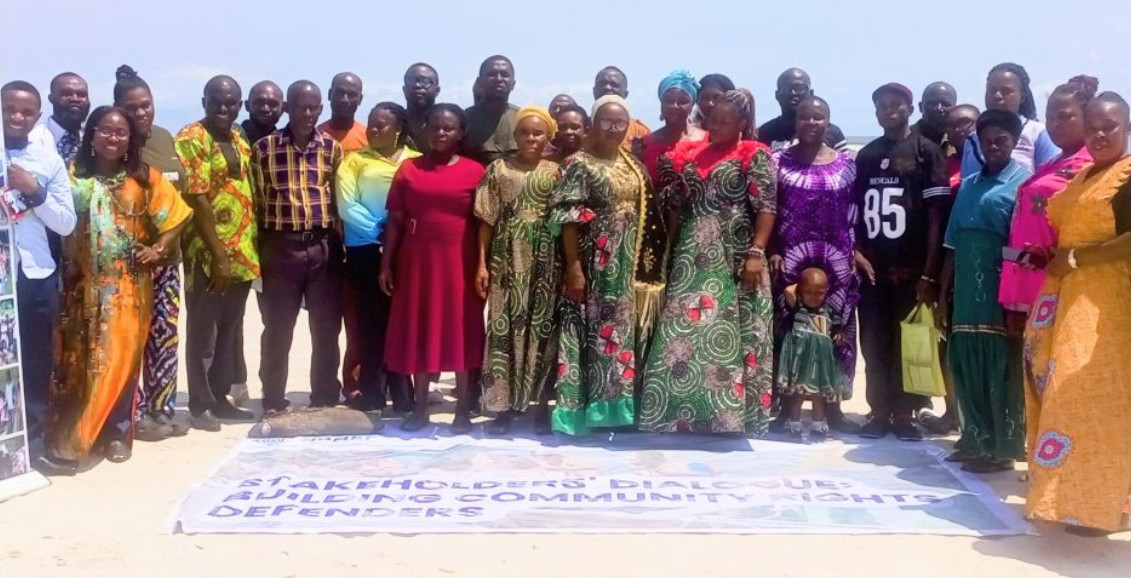
Speaking with Mrs. Akpanika Akpan Felix, a female fisherman from the Upenekang community of Ibeno, on Thursday at a Stakeholders Dialogue and Roundtable Discussion on Building Community Rights Defenders in the Niger Delta, which was arranged by the Peace Point Development Foundation (PPDF) in association with HOMEF, she told pitiful tales of how fishermen typically return home with nets full of oil stains rather than ‘fishes’.
Fish and other aquatic species have plummeted as a result of petrol flares and oil spills, she claimed. She lamented that fishermen end up harvesting oil in their nets rather than fish, causing them immense suffering, despite the amount of money spent on securing fishing gear.
“I am a woman who fishes.” Instead of fishing in the Atlantic Ocean, we typically travel to the coast. It used to be a fulfilling activity; we trained our kids and took care of ourselves with the money we made, but now things are different.
“We typically head to the sea by 5:00 or 5:30 in the morning, and before the day is up, we must have caught a lot of fish, but that is no longer the case due to the numerous oil spills. When you pull your net out of the river, you’ll find oil in it rather than fish. Our net will be torn apart by the oil.
“We are never successful. For example, if you spend N35,000 on a bundle of net, buy rope, iron, and floater, and give the net to individuals who will cut it, you will need to spend more than N130,000 before you are done, and it won’t take up to three months until the net spoils due to oil. Gas flaring kills fish, while oil chases them away and destroys our net. We’re already worn out,” she bemoaned.
The community was urged to record and promptly report pollution occurrences to the appropriate authorities, such as the government, civil society organisations, media, oil corporations, regulators, and others, as a first step towards finding a solution.
Speaking about community-based monitoring of oil pollution and the coastal ecosystem, Akwa Ibom investigative journalist Ekemini Simon advised participants to always recognise pollution “with the appearance of rainbow colour on top of the water, when their nets come out dirty and stained, when they do not see fish at all or when the few ones caught have a sort of smell.” Simon emphasised the importance of using GPS-enabled gadgets to record pollution events.
According to research, the local community’s dishonest actions have significantly reduced the number of fish in the ocean, in addition to the actions of oil firms that result in gas flares and oil spills. The participants claim that some anonymous individuals dump Gamaline20 into the sea, killing any fish in the vicinity, regardless of size.
It was reported that the dead fish would float on the water, and those people would pack them up stress-free.
Speaking to MYTIMENG, Udo Udo Jesse of Obollo in the Ibeno local government bemoaned the fact that such activities were typically conducted at night and urged the government to intervene.
According to Jesse, an Atlantic water fisherman, they are currently frustrated by the high cost of fuel and the scarcity of fish in the water, and occasionally they even incur significant debt.
“Considering the scarcity of fish nowadays and the high cost of petrol, we are in heavy debts,” he said. Sometimes you owe your clients money to purchase gasoline (N1800 per litre) to travel to the high seas, but in the end, you might not catch enough fish to pay off the debt and other costs.
Edidiong Dickson, the Energy Extractive and Climate Justice Program Lead at Policy Alert, scowled at some of the detrimental local behaviours that endanger aquatic ecosystems and public health, such as the usage of chemicals and mosquito nets for fishing.
Speaking about sustainable fishing and the restoration of mangroves, Dickson noted that the invasive Nipal palm is another threat to mangroves in the Niger Delta.
“The community should try to remove the Nipal palm from the ecosystem because it’s causing damage to the indigenous mangrove species,” he added, adding that “the roots of the mangrove are where certain species like periwinkle thrive.”
Thus, he urged the Ministry of Agriculture or the Environment to allocate funds for the mangrove restoration project.
Dickson sought government laws that prohibited the harvesting of fingerlings in order to maintain optimal fishing practices.
“At one point, the government intervened to make sure that individuals weren’t collecting fingerlings from the ocean, as this is an unsustainable activity. However, the weakness of the enforcement mechanism is clearly evident.
They used to be stopped and searched by the Navy and other authorities, but that hasn’t happened in a while. Therefore, we must return to the previous practice in which international agreements and legislation pertaining to sustainable fishing must be enforced by the authorities’, he said.
According to Umo Isua-Ikoh, Executive Director (ED) of PPDF, if this activity is not controlled, fish supply may be further reduced and some fish may eventually go extinct.
The Niger Delta Alternative Convergence (NDAC) and Nigeria Sociological Alternative Convergence (NSAC) Frameworks were created by stakeholders with similar interests in response to the unique environmental issues plaguing the Niger Delta, according to the ED, with the goal of developing potential solutions.
“Environmental issues vary throughout the Niger Delta; here in Ibeno, Akwa Ibom state, the people suffer more from petrol flares and oil spills, and we try to build their capacities on how to go about it,” he stated.
“Mining and deforestation are major problems in Cross River State. There is a superhighway inside the bush when you visit the forest. We might not have trees in the future as a result.
He argued that stakeholders may cooperate to create a cleaner, healthier, and more sustainable environment by persistent cooperation, responsibility, and well-informed action.