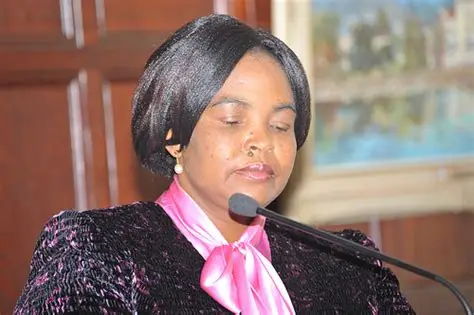
Success in leadership rarely comes to anyone by accident, it’s achieved through a steady stream of efforts over the years: consistency, exposure experience, and all the sacrifices that go with being present when it’s all on the line. In South Africa’s high-pressure & drama-ridden politics, particularly in the African National Congress, there’s a select few names that have managed to stay in the public eye across multiple administrations and roles. One of those names is Maite Nkoana-Mashabane.
Over the years she’s moved on from the grassroots activism into diplomacy, cabinet leadership, and getting her hands dirty with national policymaking. Her career is a testament to what happens when decades of hard graft in politics, unwavering party loyalty, and real hands-on experience eventually translate to real influence in government. This article is a refreshingly clear-eyed look at who Maite Nkoana-Mashabane is, where she comes from, her rather eventful journey in politics, the achievements that have stood out, the personal life that underpins it all, and the criticisms that have followed her through the years.
Maite Nkoana-Mashabane Biography
Maite Emily Nkoana-Mashabane is a South African politician who has been a stalwart member of the African National Congress (ANC) for a very long time indeed. She’s probably best known for her years in cabinet, notably her time as Minister of International Relations and Cooperation, a position she hung onto for longer than just about anyone else in South Africa’s democratic history.
She’s had a stint in a few other roles too, like Rural Development and Land Reform, and after that, Women, Youth, and Persons with Disabilities. Through those roles she’s become one of the most well-known female figures in post-apartheid South Africa’s government.
Early Life and Education
Maite Nkoana-Mashabane was born on the 30th of September 1963 in the tiny village of Ga-Makanye, which is actually located in Limpopo Province in South Africa. Growing up in a small village in South Africa during the Apartheid era wasn’t exactly easygoing—resistance and activism were just part of everyday life as far as she was concerned. Where she grew up ended up shaping the policies she later championed—land reform, community development, women’s causes, etc.
She had a good dose of education at the University of Limpopo (which was still the University of the North back then), where she earned a degree in education. A little later in life she headed off to the University of Salford in the United Kingdom, where she picked up a master’s in communications, which more than likely played a pretty significant role in her later work in public communication, international relations, etc.
Political Career
Nkoana-Mashabane became politically active in the 1980s during the height of the anti-apartheid struggle. She formally joined the African National Congress in 1984 and participated in underground political activities linked to the United Democratic Front and broader liberation movements.
After the unbanning of political parties in the early 1990s, she became part of the rebuilding process of the ANC, particularly within women’s structures. She later entered Parliament and went on to represent South Africa internationally as a diplomat.
Her early diplomatic roles included serving as South Africa’s High Commissioner to Malaysia, with accreditation to several other Asian countries. She later held a similar position in India, covering multiple South Asian nations. These roles helped position her as an experienced international negotiator.
In 2004, she returned to domestic politics and was appointed Minister of Minerals and Energy. A few years later, in 2009, she became Minister of International Relations and Cooperation. She remained in that role until 2018, overseeing South Africa’s foreign policy during a complex period marked by global economic shifts, regional conflicts, and diplomatic pressure.
She later served briefly as Minister of Rural Development and Land Reform before being appointed Minister in the Presidency for Women, Youth, and Persons with Disabilities.

Achievements and Contributions
One of Maite Nkoana-Mashabane’s most notable contributions was her long tenure in international relations. During this period, South Africa maintained a strong diplomatic presence in Africa, strengthened ties with BRICS nations, and participated actively in United Nations and African Union processes.
She played a role in peace and mediation efforts within the African continent and represented South Africa in high-level global discussions. Her experience in diplomacy made her a central figure in shaping South Africa’s international voice for nearly a decade.
In her later role focusing on women, youth, and persons with disabilities, she supported policies aimed at gender equality, youth empowerment, and social inclusion. Her office was involved in national conversations around gender-based violence, economic participation, and disability awareness.
Personal Life
Maite Nkoana-Mashabane is married and has children, though she has generally kept her family life private. She is known to be religious and maintains strong ties to her local community. Outside politics, she has shown interest in community development, education advocacy, and women-focused initiatives.
She has also been associated with sports development, particularly women’s football, and has supported efforts aimed at increasing female participation in sports administration.
Criticisms and Controversies
Like many long-serving politicians, Nkoana-Mashabane’s career has not been without criticism. During her time as Minister of Rural Development and Land Reform, she faced legal and public scrutiny over delays in land reform processes, including court rulings that criticized the department’s handling of specific land claims.
As Minister of International Relations, she was also criticized by some civil society groups for South Africa’s cautious diplomatic stance on human rights issues in certain neighboring countries. Critics argued that her approach prioritized political alliances over stronger public condemnation of abuses.
Supporters, however, maintain that her diplomatic style focused on dialogue and regional stability rather than confrontation.
Conclusion
Maite Nkoana-Mashabane remains one of the most experienced female politicians in South Africa’s democratic history. Her journey from grassroots activism to diplomacy and cabinet leadership reflects decades of involvement in governance and public service.
While her career includes both achievements and controversies, her influence on South Africa’s foreign policy and her role in advancing women’s participation in leadership cannot be ignored. She stands as an example of how long-term political engagement shapes national and international impact, especially within the evolving landscape of South African politics.